
A Disease That Kills 60,000 People a Year Has Been Largely Ignored by Science. One UConn Researcher Is Changing That

Leptospirosis is a bacterial disease spread through infected animals that kills tens of thousands of people annually—and until now, no human vaccine has existed. A University of Connecticut researcher just field a patent that could change that.
By the University of Connecticut College of Agriculture, Health and Natural Resources — summarized for agInnovation
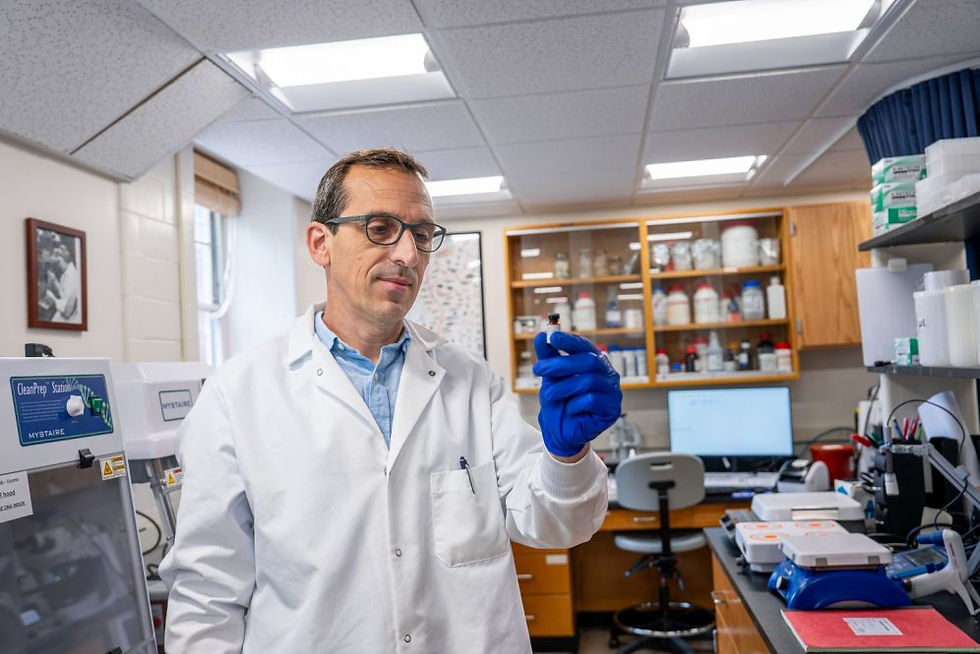
Leptospirosis doesn't get much attention in the United States—but it should. The bacterial disease, spread through contact with the urine or bodily fluids of infected animals, kills an estimated 60,000 people a year worldwide. It primarily strikes poorer, flood-prone regions, which has historically meant it receives little scientific or pharmaceutical investments. There is currently no vaccine available for humans. And with rising temperatures and more frequent flooding, cases are increasing even in the U.S.
That's the gap that Dr. Elsio Wunder, an assistant professor of pathobiology and veterinary science at the University of Connecticut's College of Agriculture, Health and Natural Resources, has spent years working to close. He recently filed a patent for a novel leptospirosis vaccine—one that uses a combination of highly conserved proteins to provide broad protection across dozens of bacterial strains. In testing with rat, hamster, and mouse models, it provided up to 100% protection against death at certain doses, and critically, it also prevented the bacteria from colonizing the kidneys—meaning vaccinated animals can't silently spread the disease to others.
This work is made possible by a $3.8 million grant from the National Institute of Allergy and Infectious Diseases (NIAID), secured in 2024. That investment is what allows Dr. Wunder to pursue a genuinely universal vaccine—something existing animal vaccines, which cover only a handful of strains and wear off quickly, have never achieved. It's also the kind of long-horizon, high-risk research that rarely attracts private funding precisely because the communities who need it most are the least profitable to serve. Public investment is what makes it possible at all.
Beyond the vaccine itself, Dr. Wunder's research is opening a secondary door: better diagnostics. Leptospirosis is routinely misdiagnosed because its symptoms resemble other tropical diseases, and current testing is expensive, technically complex, and available at only a handful of labs globally. The same conserved proteins in his vaccine candidate could form the basis of a faster, more accessible diagnostic tool—one that would work even in vaccinated animals, something existing tests can't do.
American land-grant universities have always been at their best when they take on the problems the private market won't. A disease ignored for decades because its victims couldn't pay for a cure is exactly the kind of challenge public research exists to solve. Dr. Wunder's work is a reminder of what sustained federal investment in agricultural and veterinary science makes possible—and what goes unaddressed when that investment falters.
Read the full story at UConn Today for a deeper look at how the vaccine works and what comes next on the path toward a version safe for humans.
Read the full story: Targeting a Silent Killer: UConn Researcher Patents Leptospirosis Vaccine
Stories like this one depend on continued public investment in agricultural and veterinary research. Share this post, and subscribe to the agInnovation newsletter to stay informed on the work that's too important to miss.

