
AI Identifies Two Genes in Fish Indicating Stress. The Findings May Support Global Food Supply.

University of Maryland researchers used AI to sift through more than 21,000 genes and identify just two that can predict heat stress in fish with 98.6% accuracy: a breakthrough with major implications for aquaculture and global food security.
By the University of Maryland, College of Agriculture and Natural Resources — summarized for agInnovation
More than 3.3 billion people around the world get at least a fifth of their daily animal protein from fish. With warming waters threatening commercial fish stocks and aquaculture operations under increasing environmental pressure, a fish’s ability to handle heat stress isn’t just a scientific curiosity; it’s a question of global food supply. University of Maryland animal scientist Mohamed Salem and his team have found a surprisingly elegant answer: two genes.
Fish can’t tell you when they’re stressed. But their cells are talking all the time, switching genes on and off in response to their environment. When Salem’s lab exposed rainbow trout to five different types of stress (heat, low oxygen, overcrowding, and more), they found over 21,000 genes responding. Each type of stress produced its own unique genetic signature. Testing thousands of genes to diagnose each fish’s stress level would be impractical, so the team turned to machine learning. A freshman undergraduate student, Youssef Ali, who had a background in computer science, led the AI analysis—guided by a PhD student in the lab—and eventually narrowed 12,000 heat-stress-related genes all the way down to two.
Those two genes, HSP 47 and HspA 4L, work like a pair of emergency responders: one stabilizes the structural proteins in muscle tissue under heat, and the other rushes to refold proteins before they can be damaged. Taken together, they predict heat stress in rainbow trout with up to 98.6% accuracy. Published in Nature Scientific Reports, the discovery gives fish farmers and conservationists a fast, precise, and practical tool. Because the genetic markers are present across fish species, researchers expect similar accuracy in other commercially important fish. The team has already received a follow-on grant from USDA’s National Institute of Food and Agriculture to expand the work across a broader range of environmental stressors.
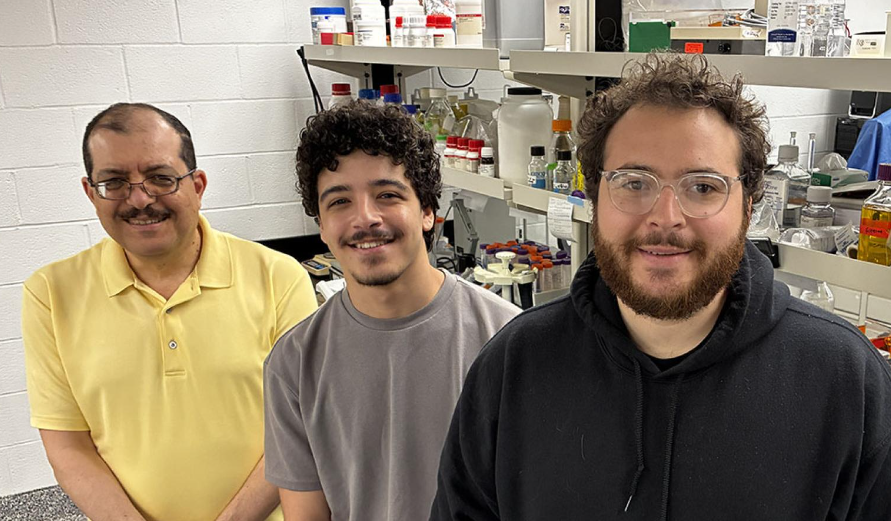
What makes this story particularly resonant is the team that made it happen: a professor, a PhD student, and a college freshman who recognized that AI could do what traditional analysis couldn’t. That’s the kind of interdisciplinary, intergenerational collaboration that public university research enables, and that federal investment in agricultural science makes possible.
Read the full story at UMD AGNR for a deeper look at the science and what it could mean for the future of fish farming and conservation.
Read the full story: The Genes Have Spoken: UMD Researchers Turn to AI to Decode Stress in Fish
The research happening at America’s land-grant universities is too important to stay inside academic journals. Share this post with someone who should know this work is happening, and subscribe to the agInnovation newsletter to keep up with the breakthroughs shaping the future of food, farming, and beyond.


