

WESTERN REGION
agInnovation-West

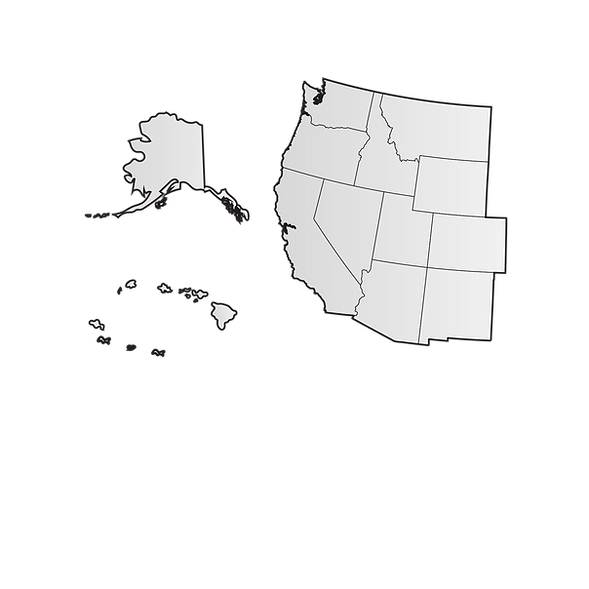
agInnovation-West, one of five such regional associations, is comprised of 13 western states and the 4 Pacific trust territories which make up the western region. The 1890 universities (historically black-serving institutions) also have a similar association of research directors.
The Research and Marketing Act of 1946 set aside 25% of Title 1, Section 9 (Hatch funds) for regional research. The Western Association of Agricultural Experiment Station Directors, now agInnovation-West, was subsequently organized in 1948 in part to aid in the planning and management of research activities important to the region. The Congressional requirement that all agricultural experiment stations spend 25% of the Hatch formula fund allocation on regional research also contributed to the formation of the association. This regional commitment was redefined in the Agricultural Research, Extension, and Education Reform Act of 1998 as “multistate research”, the multistate research fund (MRF) was created, and there were new requirements for integrated multistate research and extension activities.

LEADERSHIP
Dr. Bret W. Hess, Executive Director
Jennifer Horton, Administration Management


OUR INSTITUTIONS
American Samoa Community College
Colorado State University
Micronesia
Montana State University
New Mexico State University
Northern Marianas College
Oregon State University
University of Alaska Fairbanks
The University of Arizona
University of California
University of California, Berkeley
University of California, Davis
University of California, Riverside
University of Guam
University of Hawaii at Manoa
University of Idaho
University of Nevada, Reno
University of Wyoming
Utah State University
Washington State University


ABOUT THE WESTERN REGION
Mission
agInnovation West plans and manages multistate research across the 13 western states and four Pacific territories, connecting Agricultural Experiment Station directors with regional priorities and national partners.
Vision
agInnovation West envisions a strong, collaborative western research network that addresses the priorities of the Western Region and the nation through integrated research, extension, and academic programs.
Priorities
Sustainable Production Systems: Food Production, Food Safety, Food Security, Forestry and Horticulture
-
Address the use of forest products in green building materials and design.
-
Improve the application of agroforestry practices and principles in protecting water and soil resources.
-
Create multipurpose landscapes that can produce food, fiber, energy and other products for human use.
-
Develop management strategies to preserve the value of our forests in the face of ongoing climate changes that are altering both the economic and ecological dynamics of the forest.
Natural Resources: Water, Wildlife, Wildfire, Invasive Species, Ecosystem Services and Economic Opportunities
-
Provide more knowledge on invasion biology to better assess risk, prediction and intervention.
-
Help communities develop flexible and effective water policies and strategies.
-
Develop innovative scientific techniques, products and processes to improve water use efficiency and water conservation management practices.
-
Demonstrate the socio-economic impacts of management options so that leaders are empowered to make smart choices that balance the needs of communities and wildlife.
-
Develop new strategies to address more effective fuel management practices to help reduce the occurrence of wildfires.
Energy
-
Research innovative production and conversion pathways for expanded use of sustainable bioenergy.
-
Develop and assess the feasibility of energy efficiency and renewable energy technologies in industrial and other applications.
-
Spearhead public-private partnerships to spur clean energy- and bioenergy-based economic development solutions.
Community and Economic Development
-
Develop young scholars programs for high school students, including women and minorities.
-
Create and implement a research and Extension apprentice program for university students.
-
Provide additional fellowship programs for pre-doctoral and post-doctoral students.
Youth Development: Agriculture, Nutrition and Natural Resources Science Literacy
-
Develop new approaches to school readiness (pre-K), especially among low-income and underrepresented populations.
-
Provide alternative academic pathways and promote leadership development and citizenship opportunities to keep youth engaged.
-
Complement the K-12 school system and help develop skill sets to prepare youth for higher education and future career opportunities.
Nutrition and Health: Innovation in Foods for Health
-
Conduct fundamental and applied research to provide healthy whole foods that play a key role in preventing disease and promoting wellness.
-
Form collaborations among Western LGU scientists, industry, school personnel, and state and county agencies to deliver nutrition education programs.
-
Identify effective strategies for preventing obesity and chronic diseases related to food.
-
Equip consumers with the tools to make informed decisions about food choices, nutrition, food safety and food handling.

National Organizations
Federal Partners
Southern
Regional Links
