Your Cooler's Insulation is Made from Toxic Chemicals. A UMaine Student is Building a Better Version from Wood.

A University of Maine graduate student has developed a wood-based foam insulation that performs nearly identically to the petroleum-derived material found in virtually every conventional cooler, without the toxic manufacturing process or the environmental footprint.
By the University of Maine, Maine Agricultural and Forest Experiment Station — summarized for agInnovation

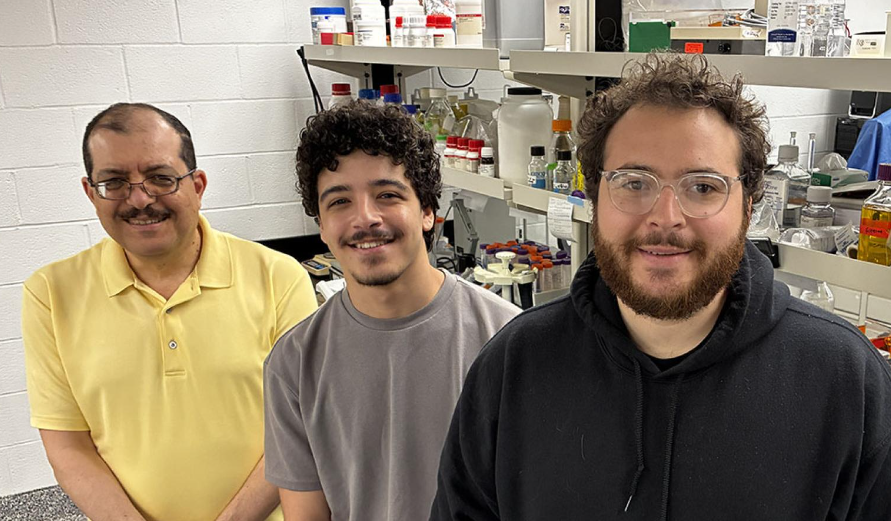
The cooler sitting in your garage almost certainly contains polyurethane foam. You probably never thought about that, and there’s no particular reason you should have. But the people who make that foam have to think about it constantly: polyurethane’s raw chemicals are highly toxic, linked to respiratory disease and skin irritation, and the material itself is petroleum-based, nonrenewable, slow to degrade, and a persistent pollutant in landfills and waterways. Quazeem Tiamiyu, a master’s student in the University of Maine’s School of Forest Resources, is working to replace it using wood.
The foam Tiamiyu has developed uses cellulose nanofibrils (CNF)—ultra-thin fibers made by breaking down wood pulp into strands far thinner than a human hair—combined with wood fiber, finely ground wood flour, and a surfactant that creates volume. The CNF acts as both a binder and a structural scaffold, creating a strong web-like matrix throughout the foam. When Tiamiyu tested his wood-based foam against polyurethane for thermal conductivity (how well it keeps cold in and heat out) the two were nearly identical. “We can actually compete with polyurethane foam,” he said.
What makes this work possible is UMaine’s Process Development Center, which is the only facility in the United States capable of continuously producing cellulose nanofibrils at pilot scale: up to four tons per day. That unique, publicly funded infrastructure is the reason this research can happen at all. The raw materials for the foam come from the byproducts of Maine’s lumber mills, turning what would otherwise be waste into a high-performance material. Challenges remain around making the foam durable enough for everyday use and scaling up from a lab process to something manufacturers can actually use, but the path is clear and the results so far are genuinely promising.
It’s a reminder that the next generation of American materials science isn’t only happening in Silicon Valley. It’s happening in university labs where graduate students are asking practical questions about the everyday objects around them, and finding renewable answers.
Read the full story at UMaine’s Maine Agricultural and Forest Experiment Station for the technical details and what comes next.
Read the full story: Wood-Based Foam Designed by UMaine Student Offers Safer, Less Wasteful Alternative to Plastic Insulation in Coolers
Behind innovations like this is sustained investment in public university research — and the specialized infrastructure that only comes from decades of that commitment. Subscribe to the agInnovation newsletter and share this story with your network.